
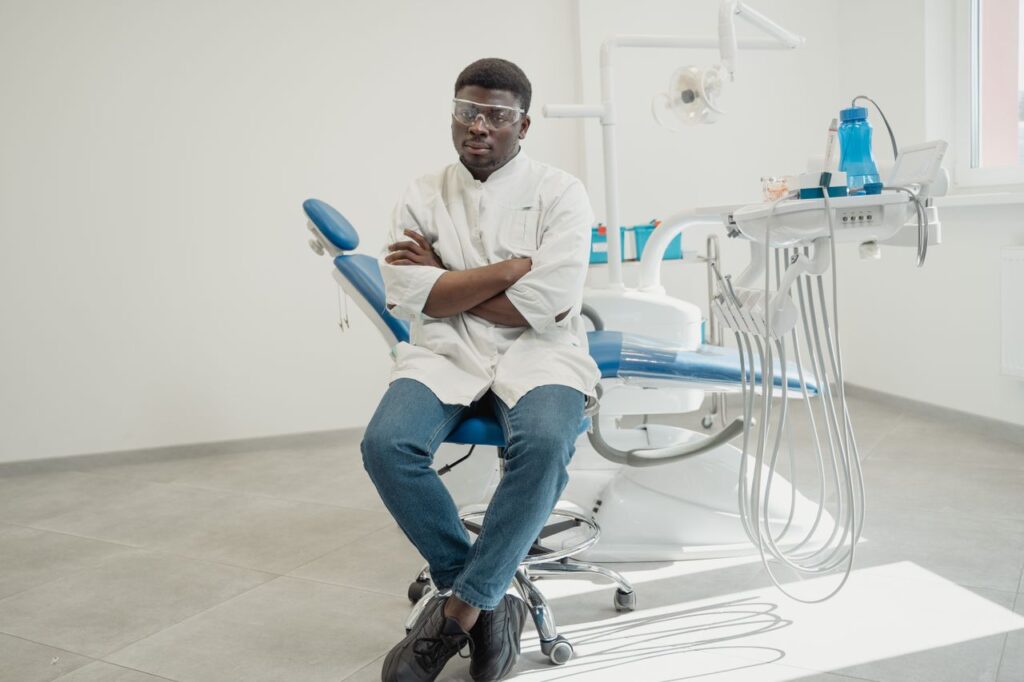
Yes, most people can go back to work the same day as a root canal, usually as soon as the numbness wears off in 2 to 4 hours. Mild soreness when biting for 2 to 3 days is common and temporary. If you had sedation, a very difficult infected tooth or a physically demanding job, taking the rest of the day or the next day off is reasonable. Severe swelling, fever or pain that gets worse after day 3 isn’t normal and needs a call to your dentist, or an emergency dentist in Toronto if it’s after hours.
Root canals have a scary reputation that mostly comes from decades ago. Today the procedure feels a lot like a long filling, and the pain people dread is usually the toothache that brought them in, not the treatment itself.
A root canal is one of the main tools in restorative dentistry, because it saves your natural tooth instead of removing it. Keeping the tooth means no gap, no implant and no shifting neighbours.
At Celina Dentistry, a premium clinic in North York where artistry meets dental excellence, we plan root canals around real schedules. Morning appointments for people who want to be back at their desk by lunch. Same-day appointments when the tooth can’t wait.
For some cases, laser dental treatment helps disinfect the canals and calm surrounding tissue. If you’ve been told you need a root canal and want to plan around work, you can request an appointment online.
What is a root canal?
A root canal (endodontic treatment) removes infected or inflamed pulp from inside a tooth, cleans and disinfects the root canals, and seals them to save the tooth.
The pulp is the soft tissue inside the tooth that holds nerves and blood vessels. Deep decay, cracks, repeated dental work or trauma can inflame or kill it. Once that happens, it won’t heal on its own, and infection can spread into the bone.
How long does a root canal take?
| Tooth type | Number of canals | Typical appointment |
|---|---|---|
| Front tooth | Usually 1 | 45 to 60 minutes |
| Premolar | 1 or 2 | 60 to 75 minutes |
| Molar | 3 or 4 | 75 to 90 minutes, sometimes 2 visits |
After the root canal, most back teeth need a crown to protect them from cracking. That’s a separate appointment or two.
What does recovery feel like, hour by hour?
| Time | What’s typical | Work-ready? |
|---|---|---|
| 0 to 3 hours | Lips and cheek still numb, talking a bit lopsided | Desk work fine, avoid big meetings if you’re self-conscious |
| Same evening | Dull ache as freezing wears off, tender to bite | Yes for most people |
| Days 1 to 3 | Soreness when chewing, mild jaw stiffness from keeping your mouth open | Yes |
| Days 4 to 7 | Most tenderness gone | Yes |
When should you take time off after a root canal?
Consider taking the rest of the day off, or the next day, if:
- You had IV or oral sedation (no driving, no important decisions for 24 hours)
- The tooth was badly infected or swollen before treatment
- Your job is physically heavy, like construction, warehouse work or lifting
- You speak for a living, like teaching, sales or presenting, and the numbness will last into your shift
- You’re a professional musician who plays a wind instrument
- You simply feel wiped out. Some people do, especially after a stressful week of toothache.
For desk jobs and remote work, the same day is usually fine. Plenty of people take a call on the drive home. (Maybe wait until you can pronounce your own name.)
Tips for going back to work after a root canal
- Book a morning appointment so numbness wears off by afternoon.
- Take pain relief before freezing wears off, if your dentist says it’s safe. Staying ahead of the ache works better than chasing it.
- Pack a soft lunch: soup, pasta, yogurt, eggs.
- Chew on the other side until your crown is placed.
- Avoid hot drinks while numb so you don’t burn your mouth without noticing.
- Bring a water bottle. Talking while numb dries your mouth.
- Don’t bite your lip or cheek. Kids do this a lot, but adults do too.
How painful is a root canal, honestly?
With modern anesthetic, the procedure itself is usually comfortable. You’ll feel pressure, vibration and the occasional click of instruments. Many patients say it felt like a long filling.
Afterward, the American Association of Endodontists and other dental bodies report that most patients have mild discomfort that over-the-counter medication handles. A small number have a flare-up with more pain or swelling, usually in teeth that were badly infected beforehand.
Root canal vs extraction: which gets you back to work faster?
| Factor | Root canal | Extraction |
|---|---|---|
| Time off work | Usually none or 1 day | Often 1 to 2 days, more for surgical removal |
| Diet changes | A few days of care | Soft foods for about a week |
| Keeps natural tooth? | Yes | No |
| Further treatment | Crown | Implant, bridge or partial denture to fill the gap |
| Long-term outcome | Saved teeth often last decades | Gap can cause shifting and bone loss if not replaced |
Myths about root canals, pain and anxiety
“Root canals are the most painful thing in dentistry.”
The infection is what hurts. The root canal removes that source of pain. Most people feel much better within a day or two.
“It’s better to just pull the tooth.”
Extraction can seem simpler, but replacing a tooth properly is more involved, takes longer and usually costs more over time. Saving your own tooth is generally the better first choice when it’s possible.
“Root canals cause illness elsewhere in the body.”
This idea comes from century-old research that’s been thoroughly discredited. There’s no valid scientific evidence that root-canal-treated teeth cause disease elsewhere.
“If I’m nervous, I’ll have to tough it out.”
Tell the team. Sedation, breaks, a stop signal and clear explanations at each step make a real difference. Anxiety is common, and it’s fine to ask for support.
Signs you might need a root canal
- Lingering pain after hot or cold, lasting more than 30 seconds
- Throbbing tooth pain that wakes you up
- Pain when biting or touching the tooth
- A pimple-like bump on the gum near the tooth
- A tooth turning grey or darker
- Swelling in the gum or face
Typical patient scenarios
The 8 a.m. accountant. A patient with a sore lower molar booked a first-thing appointment during tax season. Root canal done by 9:30, back at the office by 10:30, sipping lukewarm tea by noon.
The contractor. A patient working on job sites had a badly abscessed upper molar. After treatment, they took the next day off and avoided heavy lifting for 48 hours to keep throbbing down.
The anxious teacher. Nerves were the main issue. A Friday afternoon appointment with sedation gave a full weekend to recover before Monday’s class.
Common mistakes after a root canal
- Chewing hard food on the treated tooth before the crown goes on
- Skipping the crown appointment because the tooth feels fine
- Stopping antibiotics early, if they were prescribed
- Ignoring swelling that gets bigger after day 2
- Driving after sedation
Call your dentist if you have swelling that grows inside or outside your mouth, fever, an allergic reaction to medication (rash, hives, itching), pain that gets worse after 3 days, or your temporary filling comes out. Seek emergency care if swelling affects breathing or swallowing. This article is general information and doesn’t replace professional advice.
How to look after a tooth after a root canal
- Get the crown placed within a few weeks, as advised
- Brush twice daily and floss once a day
- Avoid chewing ice, hard candy and pens
- Wear a night guard if you grind
- Keep regular checkups so the tooth and bone can be checked on X-ray
Choosing a dentist in North York for root canal treatment
Look for a clinic that offers quick appointments for painful teeth, explains the plan clearly and uses modern tools like digital X-rays and rotary instruments. Your dentist should be registered with the Royal College of Dental Surgeons of Ontario (RCDSO).
Celina Dentistry is a premium dental clinic in North York at 500 Wilson Ave Unit 108, North York, ON M3H 0E5. We bring artistry and dental excellence together, with advanced technology, personalized care and a calm, comfort-focused environment.
We accept new patients and provide emergency dental services with same-day appointments, along with cosmetic, restorative, implant and veneer treatment. Every plan is built around natural-looking results and long-term oral health.
Call +1 647-905-7372 or email info@celinadentistry.ca to book.
What happens during a root canal, step by step?
- Exam and X-ray. Confirms the diagnosis and shows the shape and number of canals.
- Freezing. Local anesthetic numbs the tooth and surrounding area.
- Isolation. A thin rubber sheet called a dental dam keeps the tooth dry and clean, and keeps instruments and rinses out of your throat.
- Access. A small opening is made in the top of the tooth.
- Cleaning and shaping. Fine instruments remove the pulp, and disinfecting rinses clean the canals.
- Filling the canals. A rubber-like material called gutta-percha seals each canal.
- Temporary or permanent filling. Closes the opening until the crown is made.
Most of the appointment is spent on cleaning, because a thorough clean is what makes the treatment last.
How does a root canal affect your workweek overall?
| Appointment | Typical time | Time off needed |
|---|---|---|
| Emergency or diagnostic visit | 30 to 45 minutes | Usually none |
| Root canal treatment | 1 to 1.5 hours | A few hours to 1 day |
| Crown preparation | About 1 hour | Usually none |
| Crown placement | 30 to 45 minutes | None |
If you’re juggling a busy schedule, ask whether any steps can be combined. Sometimes the crown preparation can be done right after the root canal is finished.
Is a root canal an emergency?
The root canal itself is a planned treatment, but the problem behind it can be urgent. Severe throbbing pain, swelling or a fever mean infection is active and should be seen the same day. Starting treatment quickly often brings relief within 24 hours, which beats a week of painkillers and broken sleep.
Frequently asked questions
Can I drive myself home after a root canal?
Yes, if you only had local anesthetic. If you had oral or IV sedation, you need someone to drive you and should not drive for at least 24 hours.
How long will my tooth be sore after a root canal?
Most soreness fades within 2 to 3 days. Some tenderness when biting can last up to a week, especially if the tooth was infected beforehand.
Can I exercise after a root canal?
Light activity is usually fine the same day. Wait 24 to 48 hours before intense workouts if the tooth was infected or you feel throbbing.
Do I need antibiotics after a root canal?
Not usually. Antibiotics are only prescribed if there is spreading infection, swelling or fever. The root canal itself removes the source of infection.
When can I eat normally after a root canal?
You can eat once the numbness wears off, but stick to soft foods and chew on the other side until your permanent crown or filling is placed.
Conclusion
Most people can return to work the same day as a root canal, often within a few hours. Plan a day off if you had sedation, a severe infection or a physical job. Mild soreness is normal for a few days, and getting your crown placed protects the tooth for the long term.