
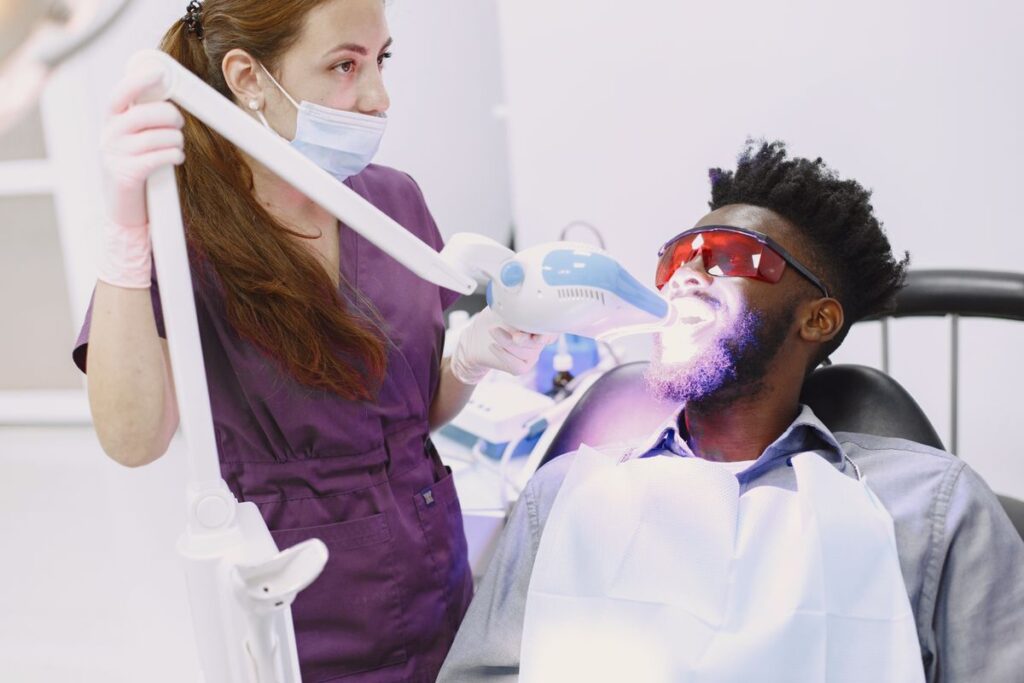
Professional teeth whitening usually lasts anywhere from six months to three years, depending on the method used and your daily habits. Results fade gradually rather than disappearing overnight, and they last longest when you limit staining drinks, avoid tobacco, and use occasional top-up treatments. Fading is normal and not a sign that anything went wrong, and a short maintenance plan with professional teeth whitening keeps your smile bright with far less effort than starting over.
Whitening is one of the quickest ways to refresh a smile, so it is natural to want to know how long the investment of time will hold. Many people also worry about sensitivity, or whether repeat whitening could harm their enamel. The answers depend on the type of whitening, the cause of your staining, and how your teeth respond.
For some people, whitening is not the best long-term solution. Deep internal staining, chipped edges, or teeth with uneven shapes may achieve more lasting results with porcelain dental veneers, which resist staining and keep their colour for many years.
It is also important to know that crowns, bonding, and fillings do not whiten. After whitening, older front restorations may look darker, and restorative dentistry can replace them to match your new shade. Some patients also ask about laser dental treatment as part of a broader smile plan, and a consultation booked through the online appointment request is the best way to compare options.
What Is Teeth Whitening?
Teeth whitening is a cosmetic treatment that lightens the natural colour of teeth using a peroxide-based gel, typically hydrogen peroxide or carbamide peroxide. The gel releases oxygen molecules that pass through the enamel and break down stain compounds inside the tooth, so the teeth reflect more light and appear brighter. It does not remove tooth structure.
How Long Does Each Type of Whitening Last?
| Whitening Method | Typical Duration | Notes |
|---|---|---|
| In-office professional whitening | About 1 to 3 years | Fast, noticeable results, best maintained with top-ups |
| Dentist-supervised take-home trays | About 1 to 3 years | Gradual, even results, trays reused for touch-ups |
| Combined in-office and take-home | Often the longest lasting | Strong initial result plus easy maintenance |
| Over-the-counter strips | A few months | Lower strength, less even coverage |
| Whitening toothpaste | Ongoing, surface only | Removes surface stains, does not change natural shade much |
These ranges are general guides. Two people can have the same treatment and see different results because of genetics, enamel thickness, and lifestyle.
Is Fading Normal, Temporary, or a Problem?
- Normal: a slight gradual dulling over months is expected as new stains form.
- Temporary: teeth can look slightly darker in the first day or two after whitening as they rehydrate, then the colour stabilises.
- Worth checking: rapid darkening of a single tooth, grey discolouration, or new spots may signal a dental issue rather than normal fading.
What Makes Whitening Fade Faster?
Staining Drinks and Foods
Coffee, tea, red wine, cola, berries, soy sauce, curry, and tomato-based sauces contain pigments that cling to enamel.
Tobacco and Vaping
Tar and nicotine cause stubborn yellow and brown staining and are among the fastest ways to lose whitening results.
Acidic Foods and Drinks
Acid softens enamel temporarily, making it easier for pigments to settle in.
Plaque and Tartar
Plaque absorbs stains and hardens into tartar, which looks yellow or brown.
Natural Ageing
Enamel gradually thins and dentine darkens with age, so teeth slowly become more yellow regardless of whitening.
How to Make Your Whitening Last Longer
- Avoid strongly coloured foods and drinks for the first 48 hours, when teeth are most porous.
- Drink coffee, tea, and cola through a straw when possible.
- Rinse your mouth with water after staining foods and drinks.
- Brush twice daily with fluoride toothpaste and floss daily.
- Wait about 30 minutes after acidic foods before brushing.
- Avoid tobacco and vaping.
- Keep regular dental cleanings to remove surface stains and tartar.
- Use custom trays for short top-ups as advised by your dentist.
Foods and Drinks: What Stains and What Helps
| Higher Staining Risk | Lower Staining Risk or Helpful |
|---|---|
| Coffee and black tea | Water, milk, and herbal teas without strong colour |
| Red wine and dark sodas | White wine in moderation, sparkling water |
| Berries, beets, pomegranate | Apples, pears, celery, and carrots, which help clean surfaces |
| Soy sauce, balsamic vinegar, curry | Cheese and yogurt, which help neutralise acid |
| Tomato sauces | Lean proteins, rice, pasta with light sauces |
You do not need to give up the foods you enjoy. Rinsing with water afterwards, using a straw for drinks, and keeping up with cleaning makes a real difference to how long your results last.
Who Gets the Longest-Lasting Results?
Whitening tends to last longest in people who:
- Have yellowish rather than greyish natural staining.
- Do not smoke or vape.
- Drink staining beverages in moderation.
- Have healthy gums and good daily oral hygiene.
- Attend regular professional cleanings.
- Use a maintenance plan rather than repeating full treatments.
People with grey or blue-grey staining, very thin enamel, or many front restorations may see less dramatic or shorter-lived results, which is why an honest assessment beforehand is important.
Whitening Results Timeline
- Immediately after in-office whitening: teeth look noticeably brighter, though they may appear slightly whiter than the final shade because they are dehydrated.
- First 48 hours: teeth rehydrate and the colour settles. This is the most stain-sensitive period.
- First two weeks: with take-home trays, the shade continues to improve gradually.
- Six to twelve months: gradual fading may become noticeable, especially with coffee, tea, or wine.
- One to three years: without top-ups, many people notice a return towards their earlier shade.
Understanding this timeline makes it easier to plan maintenance before fading becomes obvious.
How Often Can You Safely Whiten?
Most people do well with occasional top-ups, such as a few days of take-home tray use every six to twelve months, or as recommended by their dentist. Over-whitening can cause sensitivity and gum irritation and may make teeth look unnaturally translucent at the edges. A licensed professional can tailor the schedule to your teeth.
Safety note: whitening is not recommended during pregnancy or breastfeeding, for young children, or on teeth with untreated decay or gum disease. Always have an examination first. Stop using any product that causes significant pain or gum burning and contact your dentist.
Managing Whitening Sensitivity
- Use a desensitising toothpaste for two weeks before and during treatment.
- Shorten wear time or space out sessions.
- Ask about desensitising gels applied in the office.
- Avoid very hot or cold drinks for a day or two after whitening.
Whitening vs Veneers vs Bonding for Long-Term Brightness
| Option | Colour Stability | Best For |
|---|---|---|
| Whitening | Fades gradually, refreshable | Healthy teeth with surface or age-related staining |
| Porcelain veneers | Highly stain resistant for many years | Deep staining, shape or size changes |
| Composite bonding | Can stain over time, can be polished | Small chips, gaps, single-tooth corrections |
What to Expect at a Whitening Consultation
- A full examination of teeth and gums.
- Discussion of your goals and the cause of staining.
- Recording your starting shade with a shade guide or photo.
- Professional cleaning if needed.
- Choosing between in-office, take-home, or combined whitening.
- Aftercare guidance and a maintenance plan.
Myths About Whitening
- Myth: “Whitening is permanent.” Fact: results are long-lasting but not permanent. Maintenance keeps them bright.
- Myth: “Whitening damages enamel.” Fact: professional whitening at approved concentrations does not remove enamel when used correctly.
- Myth: “The whiter the better.” Fact: the most attractive result matches your natural features and skin tone.
- Myth: “Dental visits are always uncomfortable.” Fact: cosmetic treatment in a calm, comfort-focused clinic is usually relaxed and pain-free, and sensitivity can be managed.
Real Patient Scenarios
The Daily Coffee Drinker
A patient who drank several coffees a day noticed fading after eight months. By switching to a straw, rinsing after coffee, and using take-home trays for three nights every six months, they kept a bright shade for years.
The Dark Front Filling
Another patient whitened successfully but noticed an old front filling now looked darker. The filling was replaced with a new shade-matched restoration for a seamless result.
The Deep Stains
A third patient had grey staining that whitening only partly improved. Porcelain veneers on the front teeth provided a long-lasting, even colour.
Common Mistakes After Whitening
- Drinking red wine or coffee immediately after treatment.
- Overusing strong over-the-counter kits.
- Skipping professional cleanings.
- Expecting crowns or fillings to change colour.
- Ignoring sensitivity instead of discussing it with the dentist.
Signs It Is Time for a Top-Up
- Your teeth look slightly duller in photos than they did a few months ago.
- Coffee or tea staining is visible along the edges of your front teeth.
- Your teeth no longer match a recently placed crown or veneer.
- You have an important event coming up and want your smile at its brightest.
A short top-up with your existing custom trays is usually enough. If your trays no longer fit well because of dental work or tooth movement, new trays can be made after a quick check.
Professional vs Store-Bought Whitening: Why the Difference Matters
Store-bought products contain much lower concentrations of whitening agent and use generic strips or trays that do not fit every tooth evenly. This often leads to patchy results and gel contacting the gums, which can cause irritation. Professional whitening uses custom trays or carefully controlled in-office application, with your teeth and gums examined first. The result is usually more even, longer lasting, and more comfortable, and your dentist can adjust the plan if sensitivity develops.
The Value of Licensed Professional Care
Whitening is safest and most predictable when supervised by licensed dental professionals. In Ontario, dentists are registered with the Royal College of Dental Surgeons of Ontario (RCDSO), which maintains standards for safe treatment. A professional assessment ensures whitening suits your teeth and that any underlying problems are treated first.
Brighter Smiles at Celina Dentistry
Celina Dentistry is a premium Dental Clinic in North York where artistry meets dental excellence. The clinic combines advanced technology with personalized care in a refined, welcoming environment, with a focus on natural beauty and long-term oral health. Many patients consider it the Best Dental Clinic in North York for cosmetic results that look natural.
The clinic accepts new patients and offers emergency care, same-day appointments, cosmetic dentistry, restorative care, dental implants, veneers, laser dental treatment, and more. Whether you are looking for a Cosmetic Dentist in North York, a Family Dentist in North York, an Emergency Dentist in North York, an Emergency Dental Clinic in North York, or expert advice on Dental Implants North York, call +1 647-905-7372, email info@celinadentistry.ca, or visit 500 Wilson Ave Unit 108, North York, ON M3H 0E5. Patients often say they found the Best Dentist in North York and a Top Dentist in North York team here, and a trusted Dentist in North York for every stage of care.
Frequently Asked Questions
How long does professional teeth whitening last?
Typically one to three years, depending on the method and your habits. Occasional top-ups extend results.
Why are my teeth fading after whitening?
New stains from food, drinks, and tobacco gradually build up, and natural ageing slowly darkens teeth.
Can I whiten my teeth again?
Yes. Top-up whitening is safe when supervised by your dentist and spaced appropriately.
Does whitening work on crowns and veneers?
No. Restorations keep their original colour, so they may need replacing to match newly whitened teeth.
What should I avoid after whitening?
For 48 hours, avoid coffee, tea, red wine, dark sauces, berries, and tobacco, as teeth are more prone to staining during this time.
Conclusion
Professional teeth whitening usually lasts one to three years, with gradual fading over time.
Smart daily habits and occasional top-ups keep your smile brighter for longer.
A personalised plan from a licensed dentist gives the safest and most natural-looking results.