
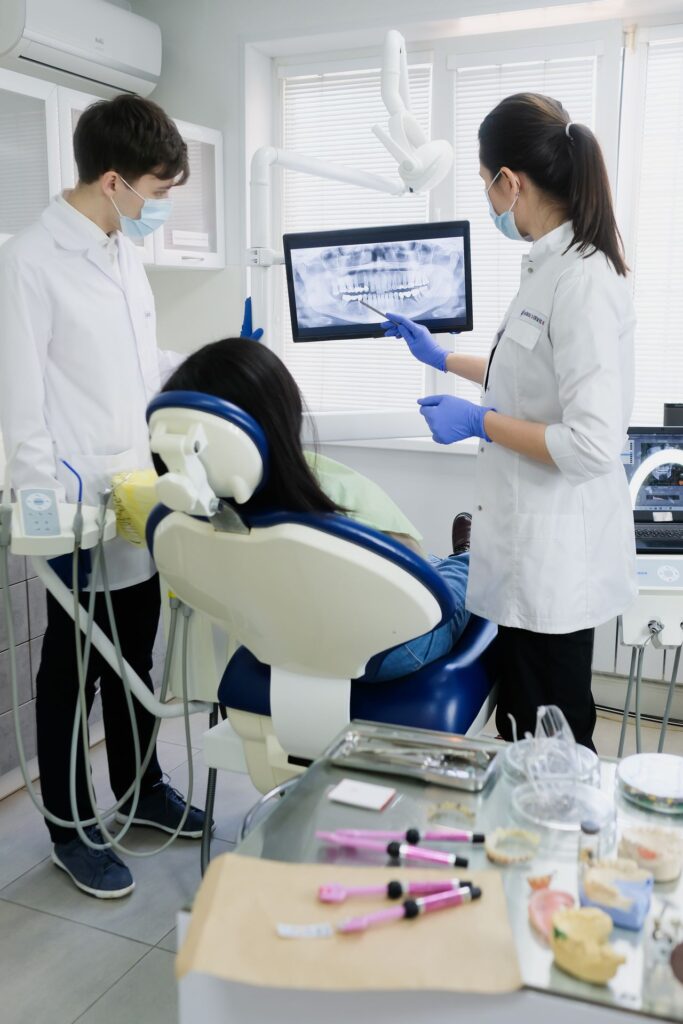
Wisdom teeth usually hurt because they are trying to erupt without enough room, which can cause pressure, gum inflammation, or infection around a partially emerged tooth. Mild, on-and-off discomfort while a wisdom tooth comes in is common and can be temporary. However, repeated swelling, infection, damage to the neighbouring molar, cysts, or decay are clear signs that the tooth should be evaluated for removal by an experienced dentist in North York.
Many people put off dealing with wisdom teeth because they fear surgery or recovery. That hesitation is understandable, yet waiting too long can make removal more complicated, since roots grow longer and bone becomes denser with age. When pain flares suddenly, emergency dental care with same-day appointments can calm infection and plan the next step.
For gum inflammation around a partially erupted wisdom tooth, gentle cleaning and laser dental treatment can reduce bacteria and swelling while you decide on long-term care.
Wisdom teeth that press against the second molar can cause decay or root damage to that tooth, which may then need care through restorative dentistry. To have your wisdom teeth checked with an X-ray, you can request an appointment online. Here is what causes wisdom tooth pain, how to tell when removal is needed, and what recovery involves.
What Are Wisdom Teeth?
Wisdom teeth are the third molars, the last teeth to develop, usually appearing between the ages of 17 and 25. Most people have four, though some have fewer or none. Because they arrive last, there is often not enough space in the jaw for them to come in properly.
Why Do Wisdom Teeth Hurt?
Eruption Pressure
As the tooth pushes through bone and gum, it can cause aching, tenderness, and a feeling of pressure at the back of the jaw.
Pericoronitis
When a wisdom tooth is partially erupted, a flap of gum covers part of it. Food and bacteria collect underneath, causing painful swelling, a bad taste, and sometimes difficulty opening the mouth.
Impaction
An impacted wisdom tooth is stuck under the gum or bone, often at an angle. It may press on the neighbouring molar and cause pain.
Decay
Wisdom teeth are hard to clean, so cavities are common in them and in the back of the second molar.
Cysts
Rarely, a fluid-filled sac forms around an impacted tooth and can damage bone.
Types of Wisdom Tooth Impaction
- Mesioangular: Tilted forward toward the front of the mouth. The most common type.
- Vertical: Upright but blocked by bone or gum.
- Horizontal: Lying sideways, often pushing into the neighbouring molar.
- Distoangular: Tilted toward the back of the mouth.
When Should Wisdom Teeth Be Removed?
Removal is commonly recommended when:
- You have repeated infections or pericoronitis
- The wisdom tooth or neighbouring tooth has decay that cannot be treated well
- The tooth is damaging the root of the second molar
- There is gum disease or bone loss around the wisdom tooth
- A cyst or other pathology is present
- The tooth is non-functional and hard to clean
When Wisdom Teeth May Be Kept
- They are fully erupted, upright, and functional
- They meet the opposing teeth properly
- You can clean them easily
- There are no signs of disease on exams and X-rays
Comparison: Early vs Late Removal
- Late teens to early twenties: Roots are often partly formed and bone is softer, which usually makes removal simpler and recovery quicker.
- Later adulthood: Roots are fully formed and bone is denser, which can make removal more complex and healing slower.
This does not mean every wisdom tooth should be removed early, but it does mean monitoring with X-rays in the late teens is wise.
What to Expect: Wisdom Tooth Removal Step by Step
- Consultation and imaging: Panoramic or 3D X-rays show the tooth’s position and nearby nerves.
- Anesthesia planning: Local anesthesia is standard, and sedation options may be discussed for comfort.
- Removal: The tooth is removed whole or in sections if impacted.
- Closure: The site may be stitched to support healing.
- Aftercare instructions: You receive clear guidance on pain control, eating, and cleaning.
- Follow-up: A check ensures healing is on track.
Recovery After Wisdom Tooth Removal
- Day 1: Bite on gauze, rest, and use cold compresses.
- Days 2 to 3: Swelling peaks and then gradually improves.
- Days 4 to 7: Most people feel much better and return to normal routines.
- Weeks 2 to 4: Gum tissue closes over the sites.
Aftercare Tips
- Eat soft, cool foods for the first few days.
- Avoid straws, smoking, and vaping to protect the blood clot.
- Rinse gently with warm salt water after the first 24 hours.
- Take pain medication as directed.
- Sleep with your head elevated.
Common Myths About Wisdom Teeth
Myth: Everyone must have their wisdom teeth removed.
Fact: Healthy, functional wisdom teeth that are easy to clean can often be kept with monitoring.
Myth: Wisdom teeth cause front teeth to become crooked.
Fact: Research suggests wisdom teeth are not the main cause of late crowding, which has several factors.
Myth: If they do not hurt, they are fine.
Fact: Impacted wisdom teeth can cause decay, bone loss, or cysts without pain.
Myth: Recovery is always terrible.
Fact: Many patients recover within a few days with good aftercare.
Real Patient Scenarios
Scenario 1: A university student has repeated swelling around a lower wisdom tooth during exam season. After two episodes of pericoronitis, removal is recommended and completed with a smooth recovery.
Scenario 2: A patient in her thirties has no pain, but X-rays show a horizontally impacted tooth creating decay on the second molar. Removal protects the neighbouring tooth.
Scenario 3: A patient’s upper wisdom teeth are fully erupted and easy to clean. They are kept and monitored at regular checkups.
Safety Disclaimer
Seek emergency care if you have swelling spreading to the neck or eye, difficulty breathing or swallowing, or high fever. Wisdom tooth assessment and removal should be performed by licensed dental professionals registered with the Royal College of Dental Surgeons of Ontario, with referral to an oral surgeon when needed.
Wisdom Tooth Care in North York
Celina Dentistry is a premium dental clinic in North York where artistry meets dental excellence, offering advanced technology, personalized care, and a comfort-focused environment. Emergency dental services and same-day appointments help patients with sudden wisdom tooth pain get relief without long waits.
New patients are welcome. The clinic provides emergency, cosmetic, and restorative care, implants, veneers, and laser treatment. Visit 500 Wilson Ave Unit 108, North York, ON M3H 0E5, call +1 647-905-7372, or email info@celinadentistry.ca. It is a trusted emergency dental clinic in North York for patients of all ages.
How to Manage Wisdom Tooth Pain at Home
- Rinse with warm salt water several times a day to clean under the gum flap.
- Brush the area gently with a soft brush, even if it is tender.
- Use a cold compress on the cheek for swelling.
- Take over-the-counter pain relief as directed if appropriate for you.
- Eat soft foods and avoid chewing on the painful side.
- Book a dental visit if the pain lasts more than two or three days.
These steps can ease symptoms, but repeated flare-ups signal that a long-term solution is needed.
Common Mistakes With Wisdom Teeth
- Ignoring repeated gum swelling at the back of the mouth.
- Skipping X-rays in the late teens and early twenties.
- Waiting until a crisis before planning removal.
- Smoking or using straws after extraction, raising dry socket risk.
- Stopping antibiotics early when they were prescribed for infection.
Do Upper and Lower Wisdom Teeth Behave Differently?
Yes. Lower wisdom teeth are more often impacted and more likely to cause pericoronitis, because the lower jaw has less space and denser bone. They also sit near the inferior alveolar nerve, which is why careful imaging is important before removal. Upper wisdom teeth are usually easier to remove, though they sit close to the sinus. When an upper wisdom tooth has no opposing lower tooth, it may over-erupt and rub on the cheek, which is another reason your dentist considers each tooth individually rather than applying one rule to all four.
Wisdom Teeth and Orthodontic Treatment
Patients finishing braces or aligners often ask whether wisdom teeth will undo their results. Current evidence suggests wisdom teeth are not the main cause of teeth shifting, which is why wearing retainers is the most important protection. Still, your dentist may time wisdom tooth evaluation around orthodontic treatment to plan any removal at a convenient point.
What Is Pericoronitis and Why Does It Keep Coming Back?
Pericoronitis is inflammation and infection of the gum tissue surrounding a partially erupted tooth, most often a lower wisdom tooth. The gum flap, called an operculum, creates a sheltered pocket where food and bacteria collect. Because a toothbrush cannot clean underneath it, the area becomes inflamed repeatedly, especially during times of stress, illness, or poor sleep when the immune system is under strain.
Symptoms often include:
- Pain and swelling at the back of the mouth
- A bad taste or odour
- Pain when biting, as the upper tooth may press on the swollen flap
- Difficulty opening the mouth fully
- Swollen lymph nodes under the jaw
A single mild episode can often be managed by cleaning under the flap, antibacterial rinses, and sometimes antibiotics. However, pericoronitis tends to return as long as the gum flap remains. If you have had more than one episode, removal of the wisdom tooth, or in some cases the gum flap, is usually the most reliable long-term solution.
Can a Wisdom Tooth Affect the Tooth Next to It?
An impacted wisdom tooth that leans forward can press directly against the back of the second molar. This creates a hidden area where plaque collects and decay can form on the second molar, often in a spot that is hard to see or treat. In some cases, pressure can even cause the second molar’s root to resorb. Because the second molar is an important chewing tooth, protecting it is one of the strongest reasons to remove a problematic wisdom tooth, even when the wisdom tooth itself does not hurt.
Feeling Nervous About Wisdom Tooth Removal?
Wisdom tooth removal is one of the most common dental procedures, yet it is also one that people worry about most. Much of that anxiety comes from stories shared by friends or online. In reality, careful planning, effective local anesthesia, and clear aftercare instructions make the experience manageable for most patients. Letting the team know about your concerns allows them to explain each step, discuss comfort options, and schedule your procedure at a time that allows you a few quiet days to recover, such as before a weekend.
Frequently Asked Questions
How do I know if my wisdom teeth are coming in?
You may feel pressure or tenderness at the back of the jaw, see gum swelling, or notice a tooth edge breaking through.
Can wisdom tooth pain go away on its own?
Eruption discomfort may come and go, but infection, decay, and impaction problems usually need treatment.
How long does wisdom tooth pain last?
Mild eruption pain may last a few days at a time. Pain lasting longer or with swelling should be checked.
Is it better to remove all four wisdom teeth at once?
Sometimes. Your dentist will recommend based on the position and condition of each tooth.
What is dry socket?
A painful condition where the blood clot is lost after extraction. Avoiding straws and smoking reduces the risk.
Conclusion
Wisdom teeth often hurt because of limited space, gum inflammation, or infection around partially erupted teeth.
Not all wisdom teeth need removal, but repeated infections, decay, or damage to nearby teeth are clear signs.
Early evaluation with X-rays makes decisions easier and recovery smoother.