
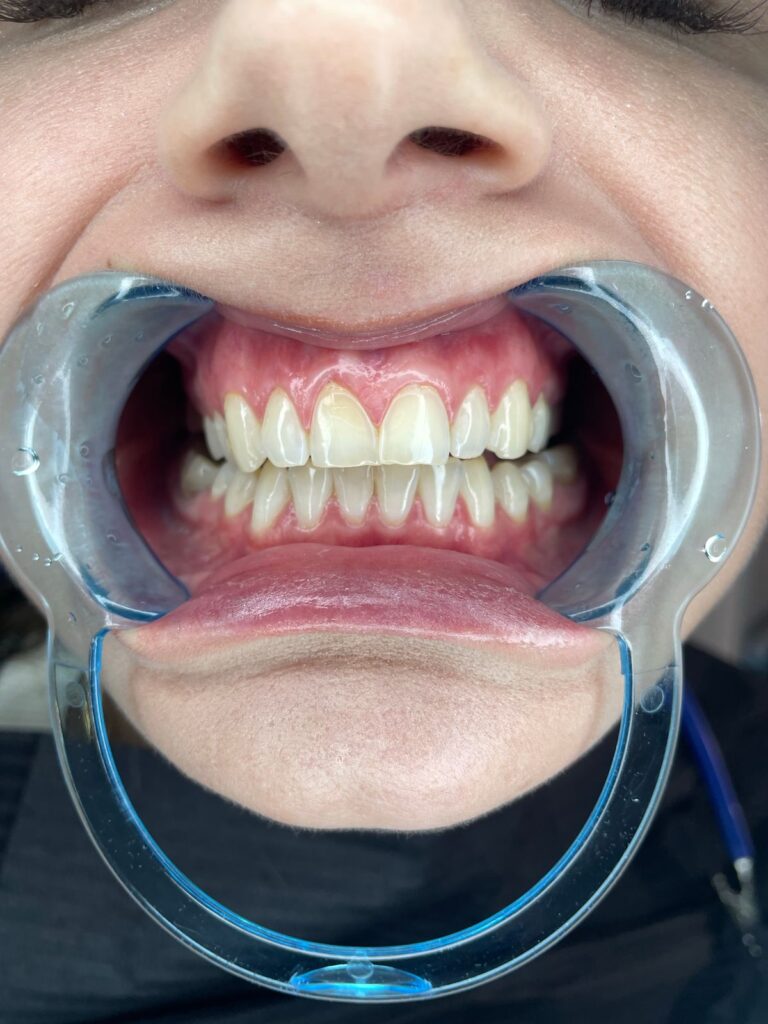
A tooth that is turning grey is most often a sign that the nerve inside it has been damaged or has died, usually after a knock or injury, sometimes months or even years earlier. Other common causes include an old silver filling showing through the enamel, a previous root canal, deep decay, or certain medications taken during childhood. A single darkening tooth is not usually an emergency, but it is a signal that should be checked, because a dead nerve can lead to infection even when there is no pain, and restorative dentistry can treat both the cause and the colour.
Noticing one tooth that looks darker than the rest can be worrying, especially when it is at the front of your smile. Many people feel self-conscious and wonder if the tooth will fall out or if it can ever look natural again. In most cases, the tooth can be kept and its appearance improved with the right treatment.
Regular whitening does not usually lighten a grey tooth with a damaged nerve, because the discolouration comes from inside. However, after root canal treatment, a technique called internal bleaching can lighten the tooth from within, and professional teeth whitening of the neighbouring teeth can help everything blend together.
Where colour cannot be fully corrected, a carefully matched porcelain veneer or crown can restore a natural look. Many patients choose custom dental veneers for front teeth because they reflect light like natural enamel.
If the grey tooth is painful, swollen, or tender to bite on, see an emergency dentist in North York promptly. For a darkening tooth without symptoms, you can request an appointment for a calm, thorough assessment.
Why Do Teeth Turn Grey?
Healthy teeth get their colour from the enamel and the dentine beneath it, with the living pulp adding a slight warmth. When something changes inside the tooth, such as bleeding into the dentine or the breakdown of pulp tissue, pigments seep into the microscopic tubules of the dentine and the tooth darkens. Other causes come from outside materials or medications.
Common Causes of a Grey Tooth
Trauma and Nerve Damage
A blow to a tooth from sports, a fall, or an accident can damage the blood supply to the pulp. The tooth may turn pink at first from internal bleeding, then grey or dark as the pulp dies. This can happen weeks, months, or years after the injury.
Pulp Necrosis From Decay
Deep decay can infect and kill the nerve, and the dead tissue breaks down and darkens the tooth.
Previous Root Canal Treatment
Root-treated teeth sometimes darken over time, particularly if tissue remnants or certain filling materials remain inside.
Old Amalgam (Silver) Fillings
Metal fillings can make a tooth look grey, especially when the remaining enamel is thin. The tooth itself may be healthy.
Tetracycline Staining
Certain antibiotics taken while teeth were forming can cause grey or brown banding across several teeth.
Ageing
Enamel thins with age, letting the darker dentine show through, but this usually affects all teeth evenly rather than one tooth.
Internal Resorption
A rare condition where tooth tissue is absorbed from inside, sometimes causing a pinkish patch before darkening.
Is a Grey Tooth Common, Temporary, or Serious?
- Common: discolouration after an old injury is frequently seen in adults who had a knock as a child.
- Sometimes temporary: a tooth that turns slightly pink or grey right after an injury can occasionally recover as the nerve heals.
- Potentially serious: a grey tooth with pain, swelling, a gum bump, or tenderness may be infected and needs prompt care.
- Silent risk: a dead nerve may cause no pain at all, yet infection can still develop at the root tip.
Grey Tooth Causes and Treatments at a Glance
| Cause | Typical Signs | Common Treatment |
|---|---|---|
| Dead or dying nerve after trauma | Single front tooth darkening, may be painless | Root canal treatment, then internal bleaching or veneer |
| Old root canal | Gradual darkening of a treated tooth | Internal bleaching, veneer, or crown |
| Amalgam filling | Grey shadow around a filling | Replace with tooth-coloured filling |
| Tetracycline staining | Grey bands on several teeth | Veneers or extended whitening |
| Decay | Dark spot, sensitivity | Filling or crown, possibly root canal |
How Dentists Diagnose a Grey Tooth
- History: any past injuries, dental work, or medications.
- Visual examination: shade, gum health, and nearby teeth.
- Vitality tests: cold or electric tests show whether the nerve responds.
- Percussion test: gentle tapping checks for inflammation at the root.
- X-rays: reveal infection, root changes, or resorption.
- Treatment plan: addressing health first, then appearance.
Treatment Options Explained
Root Canal Treatment
If the nerve is dead or infected, root canal treatment removes the damaged tissue, disinfects the canals, and seals them. This stops infection and prevents further darkening.
Internal Bleaching
After a root canal, a whitening agent is placed inside the tooth for a short time to lighten it from within. This conservative approach can produce a natural result without covering the tooth.
Veneers
A thin porcelain shell bonded to the front of the tooth masks discolouration and can adjust shape at the same time.
Crowns
If the tooth is weakened or heavily filled, a crown restores both strength and colour.
Replacing Old Fillings
When an amalgam filling causes the grey appearance, replacing it with a tooth-coloured restoration can brighten the tooth.
Comparing Cosmetic Options for a Grey Front Tooth
| Option | Tooth Preparation | Colour Result | Best Suited For |
|---|---|---|---|
| Internal bleaching | None on the outside, uses the root canal access | Natural lightening, may need a top-up in future | Root-treated teeth with mild to moderate darkening |
| Composite bonding | Minimal | Good masking of light discolouration | Small areas of colour change |
| Porcelain veneer | Thin layer of enamel | Excellent, stable colour | Moderate to dark discolouration, shape changes |
| Crown | More extensive | Excellent colour and strength | Weak or heavily restored teeth |
The most conservative option that achieves a natural result is usually preferred. Your dentist may suggest starting with internal bleaching and moving to a veneer only if needed.
Grey Teeth in Children
Young children often knock their baby teeth while learning to walk or play. A baby tooth that turns grey after a fall is common. Sometimes the colour improves as the tooth recovers, and sometimes the tooth stays dark but causes no problems until it falls out naturally. A dentist should still check it, because an infected baby tooth can affect the adult tooth developing underneath. Signs that need prompt attention include swelling, a gum bump, pain, or a tooth that becomes very loose.
How Long Does Treatment Take?
Most grey-tooth treatment happens in stages. Root canal treatment usually takes one or two visits. Internal bleaching may involve one to a few short visits spaced over several weeks while the colour is assessed. Veneers and crowns typically require two appointments, with a temporary in place in between. Your dentist will explain the timeline at your consultation so you can plan around work, events, and other commitments.
What You Can Do Now
- Book an examination, even if the tooth does not hurt.
- Note any past injuries to the tooth and when they happened.
- Watch for swelling, pain, a gum bump, or a bad taste.
- Avoid over-the-counter whitening on the grey tooth, as it is unlikely to help and may cause uneven colour.
- Protect your teeth during sports with a mouthguard.
Safety note: facial swelling, fever, or severe pain may indicate a spreading infection and need urgent care. If swelling affects breathing or swallowing, go to the emergency department.
Myths About Grey Teeth
- Myth: “If it does not hurt, it is fine.” Fact: a dead nerve often causes no pain but can still lead to infection.
- Myth: “A grey tooth must be pulled out.” Fact: most grey teeth can be saved with root canal treatment and cosmetic restoration.
- Myth: “Whitening strips will fix it.” Fact: surface whitening rarely improves internal discolouration.
- Myth: “Root canals are painful.” Fact: modern treatment with local anaesthetic is usually comfortable, and a calm, comfort-focused approach helps anxious patients.
Real Patient Scenarios
The Childhood Fall
An adult noticed a front tooth slowly turning grey. They remembered falling off a bike as a child. Tests showed the nerve had died. Root canal treatment and internal bleaching restored a natural shade without needing a veneer.
The Silver Filling Shadow
Another patient was worried about a grey premolar. The tooth was healthy, but a large amalgam filling was showing through. Replacing it with a tooth-coloured restoration solved the problem.
The Painless Infection
A third patient had a grey tooth with no pain. An X-ray revealed a small infection at the root tip. Root canal treatment cleared it, and a veneer later matched the tooth to its neighbours.
Common Mistakes to Avoid
- Waiting for pain before having a grey tooth checked.
- Trying to whiten a single dark tooth at home.
- Skipping follow-up after a dental injury.
- Choosing a cosmetic cover without first treating any infection.
- Not wearing a mouthguard during contact sports.
How to Prevent Tooth Discolouration
- Wear a custom mouthguard for sports.
- Have any dental injury checked promptly, even if the tooth seems fine.
- Treat cavities early to protect the nerve.
- Keep up with regular checkups and cleanings.
- Ask about replacing old metal fillings on visible teeth.
The Importance of Licensed Dental Professionals
Treating a grey tooth requires diagnosing the cause accurately before choosing a cosmetic solution. In Ontario, dentists must be registered with the Royal College of Dental Surgeons of Ontario (RCDSO), which ensures high standards of safe, ethical care. A licensed team combines careful diagnosis with an artistic eye so the final result is both healthy and natural looking.
Restoring Natural Smiles at Celina Dentistry
Celina Dentistry is a premium Dental Clinic in North York where artistry meets dental excellence. Using advanced technology and personalized care in a refined, welcoming environment, the team focuses on natural beauty and long-term oral health. Patients searching for a Cosmetic Dentist in North York appreciate the attention to shade matching and detail.
New patients are welcome, and the clinic provides emergency dental services, same-day appointments, cosmetic and restorative treatment, implants, veneers, laser dental treatment, and more. If you need an Emergency Dentist in North York, an Emergency Dental Clinic in North York, a Family Dentist in North York, or advice on Dental Implants North York, call +1 647-905-7372, email info@celinadentistry.ca, or visit 500 Wilson Ave Unit 108, North York, ON M3H 0E5. Many patients consider it the Best Dental Clinic in North York, with a Top Dentist in North York team, and say they found the Best Dentist in North York and a trusted Dentist in North York here.
Frequently Asked Questions
Can a grey tooth turn white again?
Often, yes. After root canal treatment, internal bleaching can lighten the tooth. Veneers or crowns can also restore a natural colour.
Is a grey tooth dead?
Many grey teeth have a dead or dying nerve, but not all. Old fillings and staining can also cause greyness. Tests confirm the cause.
How long after an injury can a tooth turn grey?
It can happen within weeks or many years later, as the nerve slowly loses its blood supply.
Will a grey tooth fall out?
Not usually, if it is treated. Untreated infection can eventually damage the bone and threaten the tooth.
Do I need a root canal for a grey tooth?
If the nerve is dead or infected, a root canal is usually recommended to prevent infection and stop further darkening.
Conclusion
A tooth turning grey usually means the nerve has been damaged, though old fillings and staining can also be responsible.
Even without pain, it is worth checking, because a dead nerve can lead to hidden infection.
With proper diagnosis, treatment can protect the tooth and restore a natural, confident smile.